Hidden Costs of Homeownership: What Year One Actually Costs
Six months after closing, most first-time buyers are still bleeding cash for reasons nobody explained before they signed. Here's the year-one budget that survives reality, market by market.
David C. · · 8 min
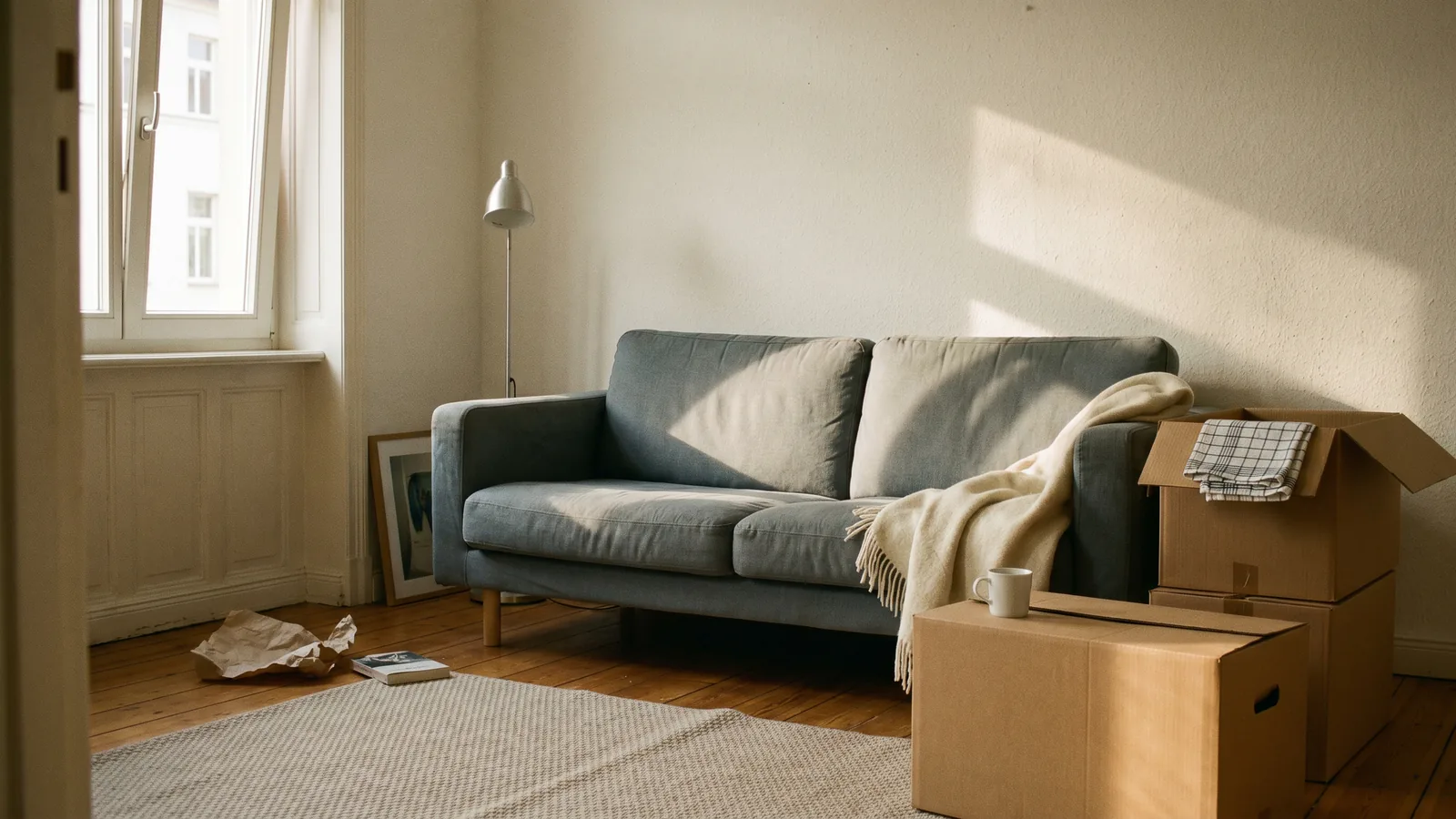
Year one of homeownership costs €8,000–€16,000 on top of the mortgage — insurance, property tax, utilities, the settling-in spend, and the first unplanned repair that almost always arrives. The Zillow 2025 analysis puts the US figure at $15,979 per year beyond the mortgage, up from $14,155 just two years earlier (Zillow research, November 2025). EU equivalents run €8,000–€14,000 depending on country, building age, and heating type. Here's the shape of it, and the budget that actually holds.
The short version
- Year one runs €8,000–€16,000 past the mortgage, with wide spread by country. Zillow puts the US hidden cost at $15,979 in 2025; UK ABI-combined insurance alone is £379, and total first-year add-ons there land around £7,000.
- Three buckets, not one. Fixed annual costs (insurance, taxes, utilities), settling-in spend (moving, appliances, immediate fixes), and probabilistic repairs (the surprise category). Mixing them is why most first-year budgets fail.
- 85% of homeowners had an unplanned repair in 2025, and 26% spent $5,000+ on it (Hippo 2024 Homeowner Preparedness Report via Carrier Management). Treat this as near-certain in year one.
- The biggest actual surprise is appliance replacement when the seller takes what you assumed was staying. Budget €2,000–€4,000 before you sign.
- 1–3% of purchase price per year for ongoing maintenance, set aside as a separate fund that rolls over. You will eventually need it.
How the first year actually breaks down
The hidden costs split into three distinct baskets, and treating them as one lump sum is exactly why most year-one budgets blow up.
1. Fixed annual costs — predictable, mostly boring
Home insurance (buildings + contents), property tax (IBI, Grundsteuer, taxe foncière, council tax), utilities, broadband, waste collection. These are monthly or annual and auto-debit once set up. Together they run €3,000–€6,000/year in most European markets, closer to $5,000 in the US.
The one to watch: home insurance has been climbing faster than wages. US premiums are up 48% in the past five years and 4.7% in the past year, outpacing household income growth of 3.8% (Zillow + Thumbtack 2025 analysis). UK ABI data shows a similar story in reverse — premiums peaked at £399 in Q3 2024 and have since eased to £379 combined in Q4 2025 (ABI, February 2026). Get three quotes when you close; switch every 12 months.
2. Settling-in spend — once, the first three to six months
This is the bucket that surprises people:
- Movers: €500–€3,000 depending on distance and volume.
- Utility setup deposits + activation fees: €100–€300 combined.
- Locksmith + immediate security fixes: €150–€400. Re-keying is the one spend every practitioner insists on and most buyers skip.
- Appliances the seller took: the single biggest surprise line. In many countries the default is that the seller keeps what they bought (fridge, washer, dryer, oven in some contracts, even light fixtures) unless the purchase agreement explicitly includes them. Budget €2,000–€4,000 for a full replacement package — nearly half of US homeowners have replaced a major appliance after moving in, typically at $1,000–$5,000 each (CS Bank new-homeowner expense guide).
- Basic furniture for unfurnished rooms: €3,000–€10,000 depending on how much you brought and how many rooms stayed empty.
- Pest control if rural or older property: €300–€550 for an initial treatment.
- Cleaning + painting before you move in: €500–€2,000 if you want the place fresh.
Total: €6,000–€20,000, drawn down over three to six months.
3. Probabilistic repairs — the surprise category
The hardest to budget because it's statistical. The Hippo 2025 report is the cleanest published number: 85% of homeowners had an unplanned repair last year, 26% paid $5,000+, and 16% paid $10,000+. A separate 2026 analysis found 50% of US homeowners say there are necessary renovations they can't afford right now (Clever Offers 2026 renovation trends). And if works are already on your list, treat them as a project with a budget system — renovation budgets overrun in four predictable ways.
The biggest sources:
- HVAC / boiler failures, especially in the first winter. A boiler that survived last year's cold snap often dies in the next. Replacement €3,000–€6,000 installed in Europe, $5,000–$10,000 in the US.
- Roof issues — US inspectors flag problems in roughly 70% of inspections, though most don't require immediate action; when they do, think $5,000–$15,000 for partial replacement.
- Plumbing, especially in older pre-1970 builds. A failed supply line or water heater is €800–€3,000.
- Electrical — outdated panels, aluminium wiring, insufficient grounding. €1,500–€5,000 depending on scope.
How much should I budget for year one?
Plan for 6–10% of the purchase price on top of the mortgage, phased across twelve months. On a €400,000 home that's €24,000–€40,000, split across three separate pockets (see the framework below).
A more conservative read of the Zillow data: the US median of $15,979 works out to ~5% of the median sale price, excluding the settling-in spend which peaks in the first 90 days. Adding settling-in and a repair fund brings you back to the 6–10% band.
What's the biggest surprise cost?
For most first-time buyers, appliance replacement when the seller takes what you assumed was staying. The purchase contract usually specifies what's included. If the washer, dryer, fridge, or oven isn't listed — and many aren't by default — the seller can take them, and they frequently do. Full replacement runs €2,000–€4,000 for a decent mid-range set.
Second-biggest: the first-winter heating-system repair or replacement. €3,000–€6,000 for a boiler in Europe, higher in the US for a full furnace + AC unit. Third: water damage from a leak that wasn't visible at inspection — often behind a cabinet or wall panel, discovered when you pull up flooring or open a wall to run a new cable.
Country-by-country: what year one actually costs (excluding mortgage and repairs)
| Country | Home insurance typical | Energy + water + broadband | Property tax equivalent | Year-one fixed total |
|---|---|---|---|---|
| US | $2,003/yr avg | ~$6,000/yr | Property tax avg $3,030/yr | ~$11,000 before maintenance + repairs |
| UK | £379/yr combined (ABI Q4 2025) | Energy £1,755 + water £603 + broadband ~£360 + TV licence £174 | Council tax Band D £2,280/yr | ~£5,550 |
| Spain | Apartment ~€210, chalet ~€408 (avg €311 in 2025, up from €285 the year before) | Luz + gas + agua ~€2,000 + internet ~€360 | IBI 0.4–1.1% of valor catastral | €4,000–€5,500 |
| France | MRH propriétaire ~€275/yr (maison €372, appartement €180) | Énergie ~€1,900 + eau €500 + internet €420 | Taxe foncière (varies widely by commune) | €4,500–€6,500 |
| Germany | Wohngebäudeversicherung €300–€900 + Hausrat €100–€250 | Energie ~€2,600 + Wasser + Internet €400 | Grundsteuer (post-2025 reform, varies by Bundesland) | €4,500–€7,500 |
| Netherlands | Opstal €150–€450 + inboedel €120–€360 | Energie ~€2,000 + water + internet | OZB + gemeentelijke heffingen | €4,000–€6,000 |
| Portugal | Seguro multirriscos: ~0.15–0.3% of capital seguro (a Lisbon 150m² apartment with €139k rebuild value = €200–€420/yr) | Electricidade + gás + água + internet ~€1,800 | IMI 0.3–0.8% of VPT | €3,500–€5,500 |
Add €5,000–€15,000 for the settling-in spend (pocket 2) and budget €4,000–€12,000 for the repair fund (pocket 3) on top of these annual fixed costs.
The framework that actually works: three separate pockets
Pocket 1 — Fixed annual costs. Insurance, property tax, utilities, broadband. Auto-paid from the main account. Review once per year at renewal and shop premiums.
Pocket 2 — Settling-in fund. Moving, appliances, immediate fixes, furniture for empty rooms. Budgeted as a single line before closing, drawn down over 3–6 months with a written log of every spend. When the pocket is empty, no more "while we're at it" purchases until next year. This is the pocket that most determines whether year one feels controlled or chaotic.
Pocket 3 — Surprise-repair fund. 1–3% of home value per year, set aside in a separate savings account before month three. On a €400,000 home, that's €4,000–€12,000 per year. If you don't use it in year one, roll it forward. You will use it eventually.
The key is keeping them separate. People who mix them run out of Pocket 1 money in October, skip the November insurance renewal, and then can't afford the December boiler repair. People who keep three accounts sail through twelve months feeling oddly calm about being €14,000 poorer.
This is exactly what CasaTab was designed for — one place for every post-closing cost by category, with the running delta against your baseline and every receipt attached. When the plumber says "that's another €600," you see instantly which pocket is paying for it. Track your year one in CasaTab and the March reckoning isn't a shock.
What to do the week you sign
Before the movers come:
- List what the seller is taking. Compare against the signed purchase agreement line by line. Every missing appliance becomes a Pocket 2 line item before you spend a euro on furniture.
- Get three home-insurance quotes. Premiums vary more than buyers expect — typically €100–€300/year between the cheapest and the most expensive policy with comparable coverage. Switch annually.
- Book the boiler / HVAC inspection now, if the house is over ten years old and the seller didn't provide a recent one. A €150 inspection catches the €4,000 surprise.
- Open the Pocket 3 account before month three. Separate savings account, auto-transfer monthly, treat it as already spent. Statistics say you'll touch it inside the first year.
The takeaway
Closing day feels like the finish line, but on the actual budget it's closer to the halfway mark for year one. The buyers who come through twelve months without stress share one practice: they treat the three pockets as three different problems, not one big number.
See the complete breakdown of what buying a house actually costs for everything that happens before closing — the down payment, notary, transfer taxes, and mortgage setup that add up to the other half of what your first year really costs.