ICO Mortgage Guarantee in Spain: Who Qualifies After June 2026
Spain's state guarantee for first-time buyers was quietly rebuilt in June 2026 — higher income caps, a bigger wealth allowance, and two more years to use it. Here's who qualifies now, what the guarantee actually covers, and the five-figure cash bill it doesn't touch.
David C. · · 8 min
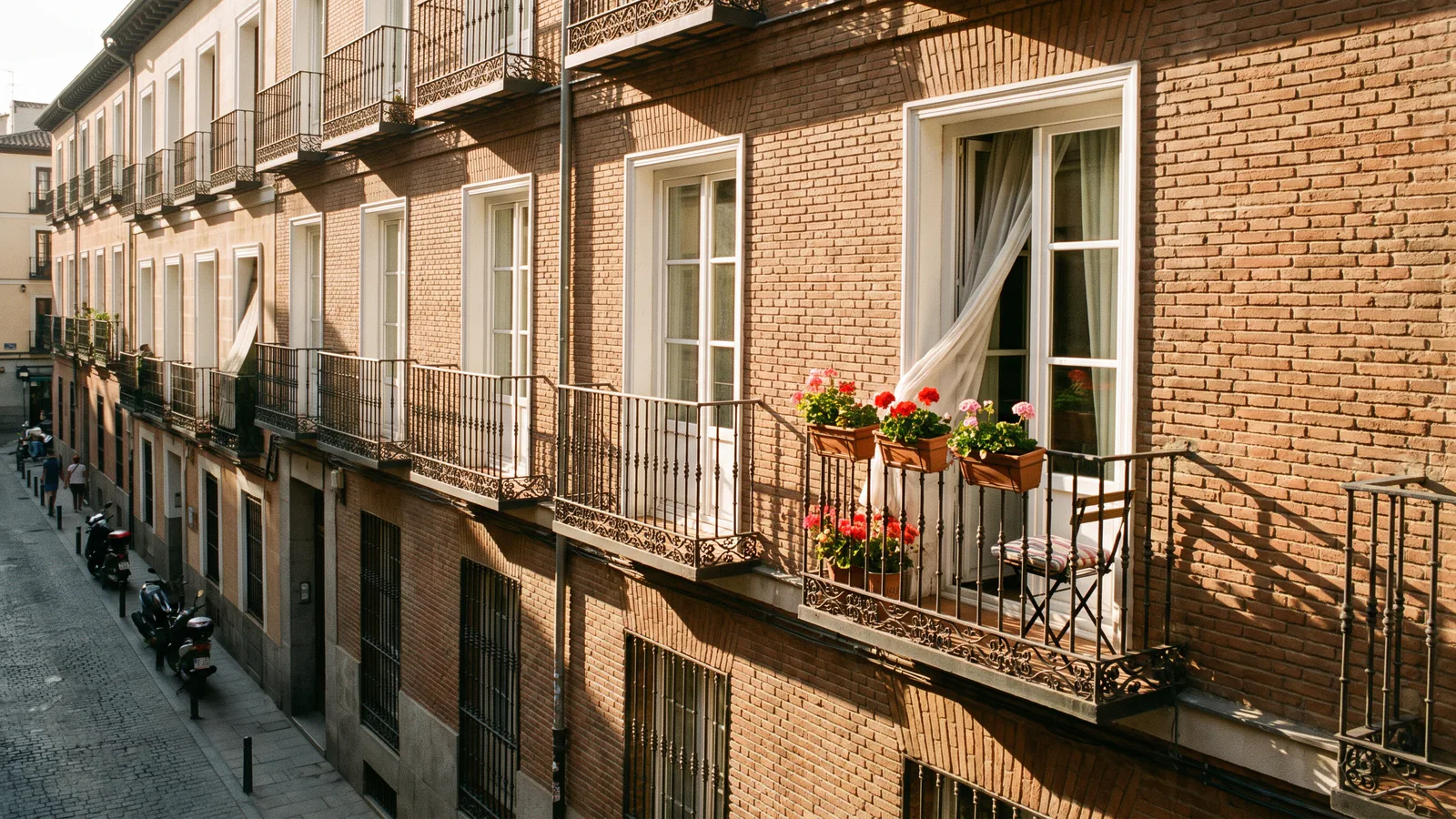
Spain's ICO mortgage guarantee lets eligible first-time buyers borrow up to 100% of the purchase price: the state backs up to 20% of the loan — 25% if the home is rated D or better for energy — free of charge, for the loan's first ten years (ICO). Since 19 June 2026 the income cap depends on the province, rising from €37,800 to as much as €63,000 a year in Madrid, Barcelona or Málaga, and the wealth limit sits at €150,000. Loans must be signed by 31 December 2027.
The short version:
- The guarantee exists to replace the deposit you don't have: with the state backing the top slice of the loan, banks can lend up to 100% of the price instead of the usual 80%.
- Since 19 June 2026, income limits are provincial: €37,800 in most of Spain, €46,200 in Valencia or Zaragoza, €63,000 in Madrid, Barcelona, Málaga, the Balearics and other high-price provinces.
- You need to be 35 or under or have dependent children, buying your first home as your main residence, with two years of continuous legal residence in Spain behind you.
- It is a guarantee, not a grant. You still owe every euro, the bank still runs its full risk assessment, and it can still say no.
- The 8–13% of the price you'll pay in taxes and fees is not covered. "100% financing" still requires five figures in cash.
What the ICO guarantee actually is
The Instituto de Crédito Oficial — Spain's state-owned promotional bank — signed a €2.5 billion agreement with the housing ministry in April 2024 to underwrite first-home mortgages for young buyers and families (announcement, La Moncloa). The mechanism: your bank lends you more than the standard 80% of the property's value, and the state guarantees the slice above it. If you default, the state pays the bank for the guaranteed portion — and then pursues you for it. Nothing is forgiven, ever. What the aval buys you is access, not money.
That distinction drives everything else. Because the bank's real exposure stays near a conventional 80% loan, it can approve buyers who are solvent on income but short on savings — the group the scheme was designed for, and the reason the government projected it would reach more than 50,000 people. Take-up ran far behind that: 8,549 guarantees issued by 31 October 2025, backing €1,091 million in lending, per the official figures published in the BOE. That shortfall is exactly why the rules were loosened in June 2026 — and why most of the €2.5 billion is still on the table.
Who qualifies after the June 2026 reset
The addendum signed on 27 May 2026 and applied from 19 June 2026 rewrote the two criteria that had been screening most buyers out. The full current list:
- Age or children. Aged 35 or under at signing, or any age if you have dependent minors.
- First home, main residence. You can't have owned property before — with exceptions for inherited homes or homes lost in a divorce — and you must live in the one you buy.
- Two years of legal residence in Spain, continuous and immediately before the loan application.
- Income under your province's cap (table below). Buying as a couple doubles the ceiling, and each dependent child adds €2,520; single-parent families get a further 70% uplift.
- Net wealth under €150,000 — raised from €100,000, so savers who did build a partial deposit are no longer punished for it.
- A clean credit record in the Bank of Spain's CIRBE registry.
The income cap is where the reset bites. Until 18 June 2026 a single national limit of 4.5× IPREM (€37,800 gross a year) applied everywhere — the same ceiling in Cuenca and in Barcelona, which is a big part of why the scheme underperformed in the cities where deposits are hardest to save. The provincial table that replaced it:
| Income cap (gross/year, per buyer) | IPREM multiple | Provinces |
|---|---|---|
| €37,800 | 4.5× | All provinces not listed below |
| €46,200 | 5.5× | Alicante, Cádiz, Cantabria, Las Palmas, Navarra, Pontevedra, Valencia, Zaragoza, Ceuta, Melilla |
| €54,600 | 6.5× | Álava |
| €63,000 | 7.5× | Madrid, Barcelona, Girona, Málaga, Balearic Islands, Santa Cruz de Tenerife, Bizkaia, Gipuzkoa |
A couple buying in Madrid can now earn up to €126,000 between them and still qualify — a bracket that was unthinkable under the old rules and covers a large share of the capital's renters in their early thirties.
How much does the ICO mortgage guarantee cover?
The ICO guarantees up to 20% of the mortgage loan — 25% if the home holds an energy performance certificate of D or better — for the loan's first ten years, at no cost to you or the bank. The guarantee window covers the decade when default risk, and your outstanding balance, are highest.
Note what "up to 100% financing" means in practice: the aval permits it, but each lender sets its own ceiling, typically the lower of the purchase price and the appraisal value. More than 60 lenders have joined the scheme — CaixaBank, Santander, BBVA, Sabadell, Bankinter and ING among them, per comparison site HelpMyCash — and the ICO publishes the signed-up list. The bank also still applies its ordinary affordability test: the guarantee changes the loan-to-value arithmetic, not how much you can borrow against your income. Meeting every ICO criterion gets you assessed, not approved.
The 25% tier quietly tilts the maths toward newer housing: energy rating D or better is routine in recent construction and rare in older stock, which adds one more line to the new build vs resale comparison — the tax bill still favours resale, but the guarantee favours the certificate.
Do foreigners qualify for the ICO guarantee?
Yes — nationality is irrelevant, but the two years of continuous legal residence in Spain immediately before the application are not negotiable. An expat with an NIE, a Spanish employment contract and two full years of residence qualifies on the same terms as a Spanish national. A buyer purchasing from abroad, or six months into their Spanish move, does not.
If you're in that second group, the scheme still matters to you in one indirect way: it adds financed buyers at exactly the price points where foreign and local demand overlap. But your own path runs through a conventional deposit — typically 30–40% of the price for non-residents, plus costs — which is its own planning exercise.
The five-figure bill the guarantee doesn't touch
Here is the number that surprises almost everyone who gets approved. The aval can eliminate the deposit; it does nothing about purchase costs, which in Spain run roughly 8–13% of the price — ITP transfer tax of 4–11% on a resale (or 10% IVA plus AJD on a new build), notary, land registry, gestoría, and the appraisal you pay for under mortgage law. None of that can be rolled into the loan. The Spain buying-costs calculator prices that exact cash bill for your region — set the mortgage slider to 100% and the taxes-and-fees line is what's left.
A worked example — couple, both 31, buying a €250,000 second-hand flat in Madrid with 100% financing:
| Item | Cost |
|---|---|
| Deposit | €0 — covered by the 100% loan |
| ITP (6% in Madrid) | €15,000 |
| Notary (purchase deed) | ~€900 |
| Land registry | ~€500 |
| Gestoría | ~€400 |
| Appraisal (tasación) | ~€400 |
| Cash needed at signing | ~€17,200 |
So the honest reading of "no deposit needed": this couple still hands over more than €17,000 before the keys — and that's before a single moving box or piece of furniture. The full inventory of what buying actually costs barely changes with the aval; only the deposit line goes to zero.
Until when can you apply for the ICO aval?
Mortgages under the guarantee line must be formalized by 31 December 2027 — a deadline already extended once, from the original end of 2025. The €2.5 billion allocation is first-come: with roughly €207 million in guarantees issued by late 2025, the binding constraint is the calendar, not the budget.
One practical warning from the trenches: official information lags. Weeks after the June 2026 changes took effect, parts of the ICO's own FAQ still showed the old €100,000 wealth limit and the 2025 deadline. Banks' product pages lag further. If a lender quotes you the pre-June criteria — the flat €37,800 cap, the old wealth limit — ask them to check the current convenio terms rather than walking away.
How buyers who get this right actually do it
The approved-then-stranded pattern is common enough to plan against: buyers clear the ICO criteria, get the 100% loan, and then discover the €17,000 cash bill three weeks before signing. The ones who avoid it treat the aval as one line in a complete purchase budget, not as the budget itself. They price the ITP for their region before making offers, get the energy certificate early — it decides whether the guarantee runs at 20% or 25% — and track every cost from the arras deposit onward next to the mortgage itself, so the cash position at signing day is a number they've watched evolve, not a surprise. That running ledger — every fee, tax and invoice of the purchase alongside the mortgage — is exactly what CasaTab was built to keep, from the first arras payment to the last furniture delivery.
The June 2026 reset genuinely widened the door: provincial caps up to €63,000, wealth allowance at €150,000, two more years on the clock, and most of the fund unspent. If the old limits screened you out, you may now be inside them. But the guarantee replaces exactly one line of the budget — the deposit — and the other five figures still have to be real money, in your account, on the day you sign.